Tuesday, January 6, 2015

★★★★★ Nelsons strikes a win with his first release with the Boston Symphony

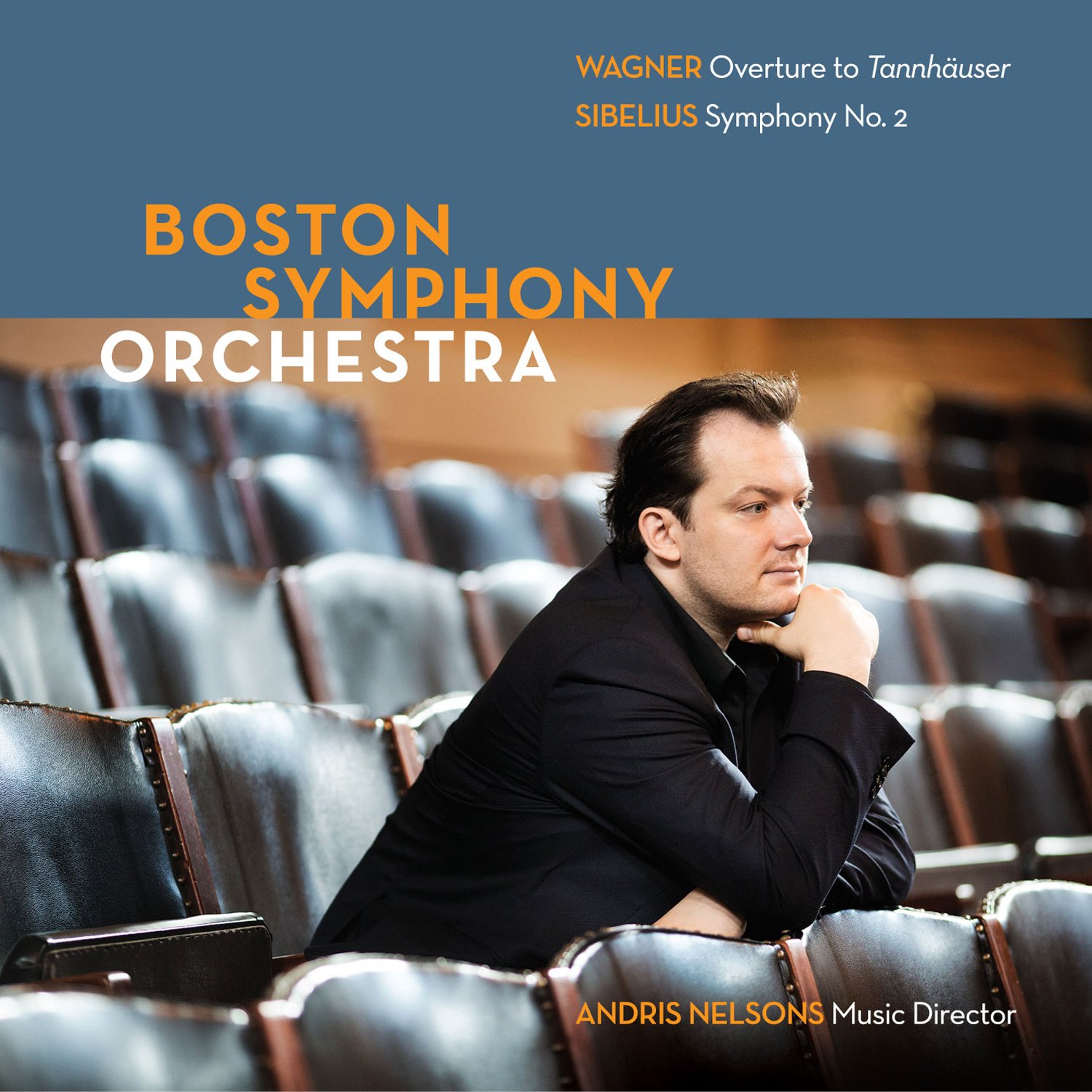
Andris Nelsons Wagner and Sibelius
I anticipated this first release of Andris Nelsons and the Boston Symphony with high hopes. I've become a great fan of his, and his career has been on a fast upward note. His blessed lack of superficiality is his greatest strength, especially when coupled with his enthusiasm. My only worry with him as a musician is that he would seem susceptible to relying on natural instinct, missing potential for drama. But my concerns have usually been unwarranted.

Starting with Wagner's Tannhaauser Overture, Nelsons stands out for his natural poise and spontaneity. Nelsons is more concerned about freedom of expression than overwhelming power, and he doesn't seek achieve maximum control. Nonetheless, there is an efficacy in the fluidity of his interpretation that enables the lyricism to soar. His feeling of breadth is unmissable. Certainly this is Wagner with a greater emphasis on inner emotion than grandeur. If Nelsons isn't as persuasive as past rivals, this is still an encouraging reading.

Monday, January 5, 2015

My pledge to fairness on The Classical Commentator

My blog has received a massive influx of hits in the past several days due to my post responding to Norman Lebrecht's lambasting of the Vienna Philharmonic. During the online debate that has transpired, many comments on the Slipped Disc have been removed. Despite his claim that he looks at both sides of the story, Mr. Lebrecht has a hard time handling criticism of his own criticism.

It's a travesty that has been hard for me to watch. A man with prominence in the musical world makes a radical claim against an orchestra, music lovers point out flaws in his logic, and he swiftly removes their comment. Why? It seems Mr. Lebrecht is more concerned about his own fading reputation than tangible things like logic and truth.

Sunday, January 4, 2015

Candid confessions of an avid critic, Part One

I'm only an amateur critic, starting my blog here at The Classical Commentator after years of writing reviews on Amazon. I starting writing for the thrill of it; after hearing inspiring music, it's only natural to want to share your experience with others. So I was slowly pulled into the art. I'm still too young to be critic, really; how many twenty-year-olds own over a thousand Classical CDs and have over 400 reviews posted online?

But the joy is so fulfilling. After years of intense piano practice, I slowly came to feel that I understood music in a special way. When I starting reviewing, I didn't have anything insightful to say at all. I think I was fifteen when I started. But after years of listening to an increasingly wider variety of both compositions and interpretations, I felt things started to click.

Saturday, January 3, 2015

In defense of the Vienna Philharmonic: a response to Norman Lebrecht

How many articles does Norman Lebrecht need to post against the Vienna Philharmonic? Since the start of the year, he has made three separate posts against the orchestra on his blog, Slipped Disc. He has asked conductors to refuse to conduct the orchestra until they hire more women. His articles have received a mixed, if predominately negative reception. No doubt he feels irked, because his latest article makes sharp jabs at his critics, who he calls "tunnel-visioned respondents". The article suggests that those who disagree with him favor discriminating.

I've taken issue with his articles from the beginning, and now that he has resorted to name-calling, I've decided to respond. Really, I'm most disappointed by his choice to assume that those who disagree with him favor discrimination. I, for one, most assuredly do not. I believe that all musicians should be judged by their merit, not by their gender or skin color. I will say up front that if the Vienna Philharmonic expands the number of women in its ranks, I will be happy for the fortunate new members.

Friday, January 2, 2015

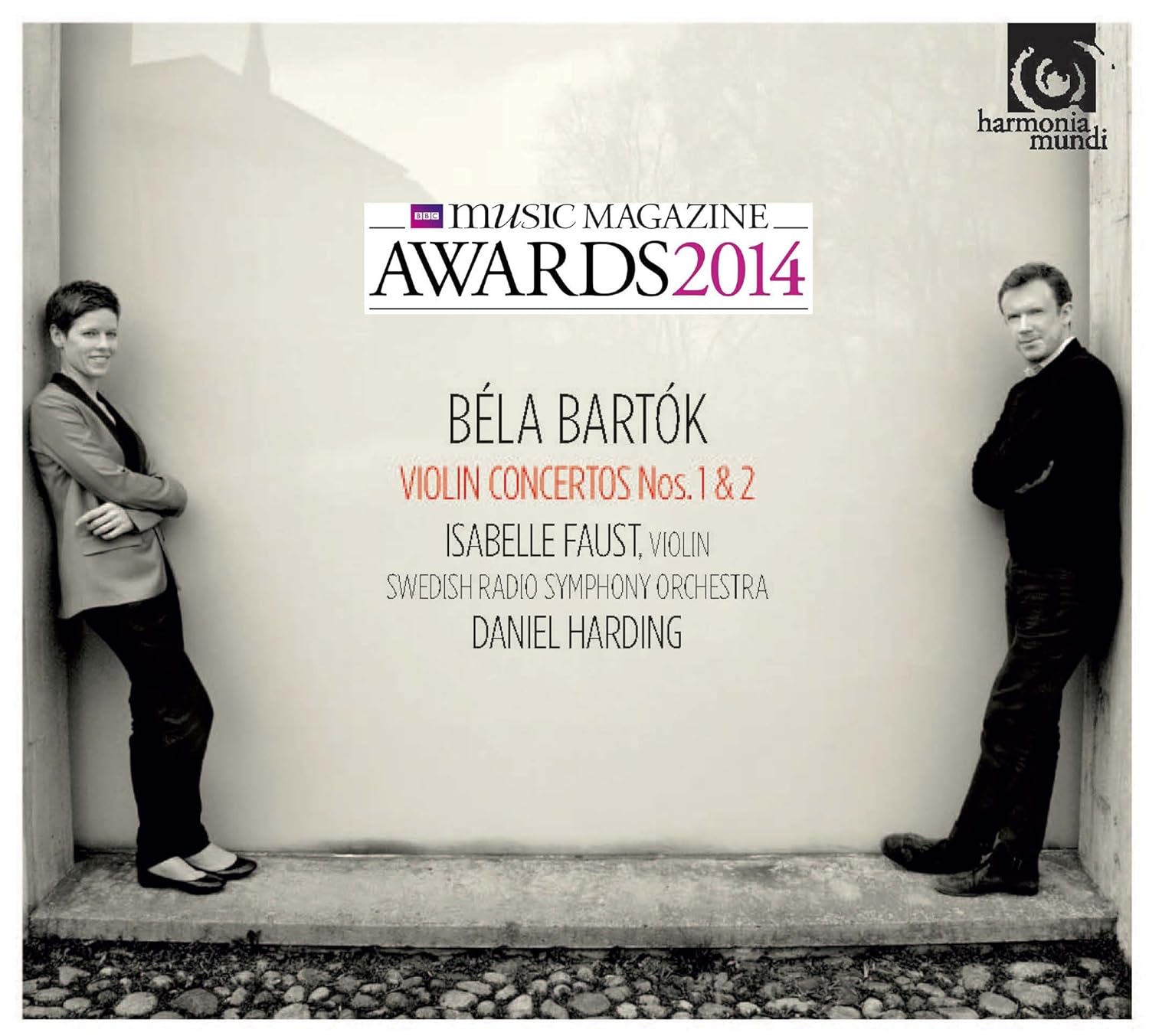
★★★★★ Faust and Harding unite for a deeply touching Bartok Second Violin Concerto

Bartok: Violin Concertos Nos. 1 & 2
Sometimes a recording moves the listener in a personal way, making it difficult to translate the impact into words. I feel that way about this Bartok Second Violin Concerto from Isabelle Faust with Daniel Harding and the Swedish Radio Symphony. My love for this concerto is limitless, and to hear interpreters capturing its meaning with such inspiration has left me on the verge of tears, no, actually wiping them.

The disc starts out with the First Violin Concerto, which isn't nearly as successful as Bartok's following masterpiece. I own a splendid version of the concerto from Gidon Kremer with Pierre Boulez and the Berlin Philharmonic, a recording the maximizes the depth and sonority of the Berliners. Here the mood is lighter and more austere, without the dark plunges. It's subdued, so the sound world of the piece comes across very gently.The mood is almost too withdrawn. Harding's accompaniment is backseat, reducing the intensity. It doesn't hurt to take your time in this music, though, and the sensitivity and nuance are striking. I certainly prefer Kremer, but there's a rustic feel here that will keep me returning on occasion.

Friday, December 12, 2014

Norman Lebrecht goes on another tirade against the Vienna Philharmonic

Sigh. British music columnist Norman Lebrecht has developed a reputation for bashing great musicians, and he's published rants against the Vienna Philharmonic multiple times. He finds it troubling that the orchestra is over 90% male, arguing that the orchestra is discriminating against women. He seems unable to look at a great cultural institution without finding some argument to make against it.

But his latest article is especially intolerable. Does Lebrecht realize that Nazi Germany ended 70 years ago? Apparently not. Many music lover are getting ready to enjoy the famous Vienna New Year's Concert. But Lebrehct?  "The tradition, however, is decidedly pernicious. This concert came into being as a gift to Nazi criminals, a cover for genocide."

★★★★☆ The Berliners are impeccable, but Abbado isn't a revolutionary

Beethoven: Symphonies Nos. 1 & 2
Claudio Abbado brought many changes to the Berlin Philharmonic after ascending to the podium after Herbert von Karajan. Beethoven brings out the contrasts with startling realism, as the weltering, homogenized sound of Karajan's orchestra is replaced by Abbado's bright, leaner textures. Frankly, I find myself missing the intensity of Karajan, but the added detail and freedom of expression Abbado discovers keeps me from dismissing it. Even in early Beethoven, though, there could more grandeur and passion than Abbado delivers.

Here the Symphony No. 1 starts out positively, with rather zippy spirits, Abbado clearly favoring a classical coloring. It's athletic, with definite touches of HIP (historically informed performance). We're clearly in the realm of Haydn, but shouldn't Beethoven's revolutionary side be more dominating? The Berliners play without a care in the world, but there's no bite to their timbre, something that was never lacking under Karajan. Niceness is a second cousin to blandness, and after awhile, Abbado starts to sound quite ordinary. At least he's genuinely cheerful; the orchestra is quite impressive, especially the woodwinds. It's hard to have anything but admiration for the Scherzo, which moves with energy and complete dedication from the orchestra--it's the standout for me.